
| Most veterinary exam room additions take 3 to 6 months from design kickoff to seeing patients in the new rooms. Converting existing interior space into one or two exam rooms usually needs 6 to 10 weeks of actual construction. A structural addition that expands the building footprint runs longer, typically 8 to 12 months door-to-door. The clinic stays open through almost all of it. |
If your exam rooms are booked solid, your lobby is backing up, and your doctors are losing minutes every day waiting for a room to open, you already know the problem. What you probably don’t know yet is how long fixing it will take, and whether your practice can survive a construction crew working twenty feet from a cat with a heart condition.
We’ve spent more than three decades designing and building commercial and veterinary spaces in Tennessee, including projects like Carothers Parkway Veterinary Clinic and Richland Animal Clinic. This guide walks through the real construction timeline for adding exam rooms to a veterinary clinic, what changes that timeline, and how practices keep treating patients while the work happens.
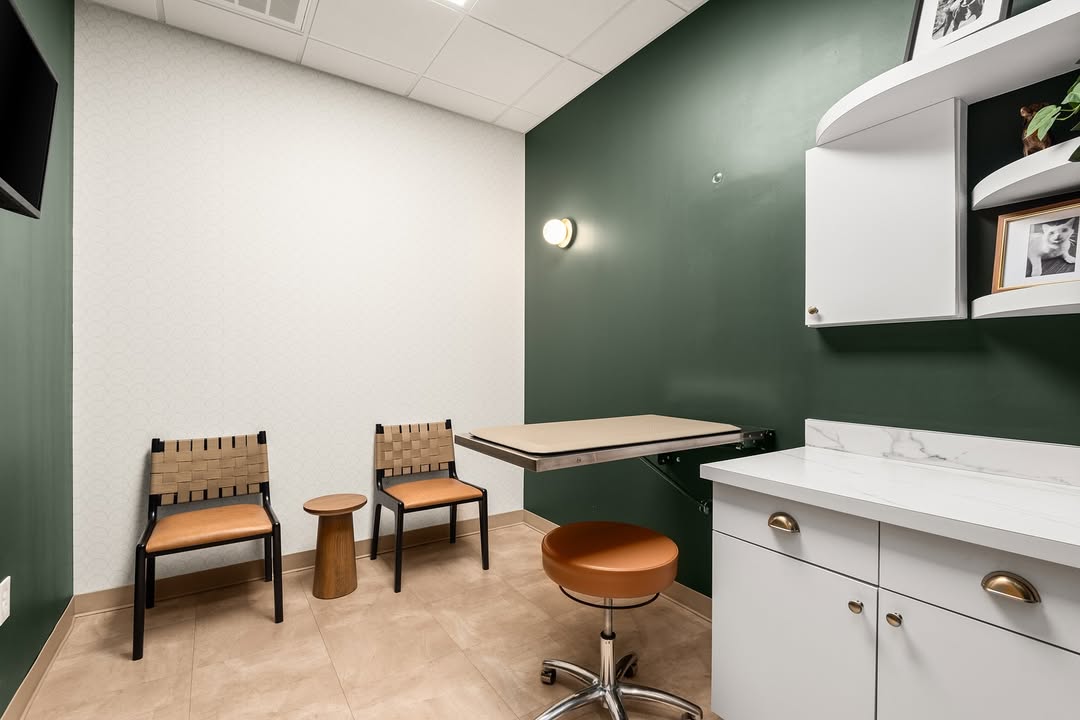
A completed exam suite from one of our veterinary projects: fold-down table, durable finishes, and seating for the whole family in roughly 120 square feet.
Key Takeaways
- Adding exam rooms to a veterinary clinic takes 3 to 6 months total for an interior renovation and 8 to 12 months for a building addition, including design and permitting.
- Actual construction is the shorter half: 6 to 10 weeks for one or two rooms built within existing space. Design, permitting, and pre-construction take just as long.
- Rooms built together share plumbing and HVAC runs, so a second or third exam room adds only a couple of weeks to the schedule. Coming back later means starting the whole process over.
- Your clinic stays open. Phased construction with sealed dust barriers, after-hours noise scheduling, and a temporary patient flow plan adds only 1 to 2 weeks compared to working in an empty building.
- The most common delays are permit revision cycles and surprises inside existing walls, both largely preventable with complete drawings and a pre-construction investigation.
- Start planning 6 to 9 months before you want the rooms open. Practices that wait until they’re turning patients away always wish they’d called sooner.
What’s in This Guide
- How long does adding exam rooms actually take?
- Timeline by number of exam rooms
- The six phases, step by step
- Can your clinic stay open during construction?
- Renovation vs. addition vs. new construction
- What makes veterinary construction different
- A sample week-by-week schedule
- What causes delays, and how to avoid them
- What new exam rooms do for your bottom line
- Frequently asked questions
How Long Does It Take to Add Exam Rooms to a Veterinary Clinic?
The typical construction time for adding exam rooms to a veterinary clinic is 6 to 10 weeks of construction for an interior renovation, or 4 to 8 months for a building addition. Add design and permitting on the front end, and the full project timeline runs roughly 3 to 6 months for interior work and 8 to 12 months for an expansion.
Those ranges are wide for a reason. “Adding exam rooms” can mean anything from converting an oversized storage room into a single consultation room to pushing a wall out and adding 800 square feet of new building. Here’s how the full veterinary project timeline breaks down across both scenarios:
| Project Phase | Interior Renovation | Building Addition |
| Feasibility & space planning | 2–3 weeks | 3–4 weeks |
| Design & construction documents | 3–6 weeks | 6–10 weeks |
| Permitting | 4–8 weeks | 8–12 weeks |
| Pre-construction & material ordering | 2–3 weeks (overlaps permitting) | 3–4 weeks (overlaps permitting) |
| Construction | 6–10 weeks | 16–32 weeks |
| Equipment, inspection & opening | 1–2 weeks | 2–3 weeks |
| Total | 3–6 months | 8–12 months |
One thing worth saying early: the construction schedule itself is rarely what surprises practice owners. It’s everything before the first hammer swings. Design, permitting, and pre-construction routinely take as long as the build, and that front half of the timeline is where a design-build approach saves the most time, because the architect and the general contractor are the same team working from the same drawings.
How Much Does the Timeline Change Per Exam Room?
Adding one exam room within the existing space typically takes 4 to 6 weeks of construction. Two to three rooms take 6 to 10 weeks, and four or more rooms, which usually require a structural addition, take 4 to 8 months. Rooms added side by side share plumbing and HVAC runs, so each additional room costs less time than the first.
| Scope | Typical Approach | Construction Time | Full Project Timeline |
| 1 exam room | Convert existing interior space | 4–6 weeks | 3–4 months |
| 2–3 exam rooms | Interior reconfiguration | 6–10 weeks | 4–6 months |
| 4+ exam rooms | Building addition or major remodel | 4–8 months | 8–12 months |
The efficiency of grouping matters more than most owners expect. If you think you’ll need a third exam room within two years, building it now alongside rooms one and two usually adds only a couple of weeks to the schedule. Coming back later means repeating design, permitting, mobilization, and another round of disruption from scratch.
What Happens in Each Phase of a Veterinary Exam Room Addition?
Every veterinary exam room addition moves through six phases: feasibility, design, permitting, pre-construction, construction, and equipment installation with final inspection. Construction itself is usually the longest single phase, but design and permitting together often match it week for week.
Phase 1: Feasibility and Space Planning (2–3 Weeks)
Before anyone draws a wall, someone has to answer a harder question: where do these rooms actually go? A good feasibility review looks at your floor plan, your patient flow, and your utility infrastructure. Can the existing electrical panel handle more circuits? Is there a plumbing chase nearby if you want a sink in each room, which you almost certainly do? Does the HVAC system have capacity for additional zones, or will it need an upgrade?
This is also when honest conversations happen about trade-offs. We’ve seen practices ready to give up their staff breakroom for an exam room, and sometimes that’s the right call. Sometimes it’s a morale decision you’ll regret by August. Workflow design matters as much as square footage.
Phase 2: Design and Construction Documents (3–6 Weeks)
The design phase turns the chosen layout into permit-ready drawings: floor plans, reflected ceiling plans, mechanical, electrical, and plumbing sheets, finish schedules, and details for casework and exam tables. For veterinary facilities, this is where the specifics that generic commercial contractors miss get baked in, like sound attenuation between rooms, seamless flooring with coved bases, and ventilation designed for odor control rather than just temperature.
Phase 3: Permitting (4–8 Weeks for Interior Work)
Commercial permit review through Metro Nashville Codes, or the equivalent department in your county, typically takes four to eight weeks for an interior renovation. Structural additions take longer because they trigger zoning review, site plan review, and sometimes stormwater requirements.
The single biggest variable here is drawing quality. Complete, code-coordinated documents tend to pass review in one cycle. Incomplete drawings come back with comments, and every revision cycle adds two to four weeks. This is, frankly, where a design-build firm earns its keep: the people who drew the plans are the same people who will build from them, so the drawings get done right the first time.
Phase 4: Pre-Construction (2–3 Weeks, Overlapping Permitting)
While the permit sits in review, a well-run project doesn’t sit still. Long-lead items get ordered, things like specialty doors, casework, light fixtures, and HVAC equipment that can take six to ten weeks to arrive. Trades get scheduled. And critically for an operating clinic, the phasing plan gets finalized: where the dust barriers go, how patients route around the work zone, and which tasks must happen after hours.
Phase 5: Construction (6–10 Weeks for Interior Renovations)
For a typical two-room interior addition, construction follows a predictable rhythm: containment and demolition first, then framing, then the mechanical, electrical, and plumbing rough-in, then inspections, then drywall, paint, flooring, casework, and fixtures. Rough-in inspections are scheduled milestones, and a contractor who knows the local inspectors and their calendars keeps the schedule from drifting.
Phase 6: Equipment, Final Inspection, and Opening (1–2 Weeks)
Exam tables get set, lighting gets aimed, diagnostic equipment gets installed and tested, and the space gets a deep clean to clinical standards. The final inspection and, where applicable, an updated certificate of occupancy close out the permit. Then the schedule coordinator does the most satisfying task of the whole project: opening the new rooms to appointments.
| Wondering What Your Timeline Would Look Like?
Send us your floor plan, and we’ll tell you, honestly, what’s realistic for your building, your scope, and your budget. Request a Feasibility Conversation Or call Rob Cochran directly: 615-275-5133 |
Can You Keep Your Veterinary Clinic Open During Construction?
Yes. The vast majority of exam room additions are completed with the clinic fully operational. Phased construction, sealed dust barriers, after-hours scheduling for noisy work, and a temporary patient flow plan let most practices keep nearly their full appointment schedule running throughout the project.
This is the question that keeps practice owners up at night, and it deserves a real answer rather than a reassuring shrug. Here’s how it actually works on a well-managed veterinary clinic renovation:
- Hard containment, not plastic sheeting on a frame. The work zone gets sealed with temporary walls, taped and gasketed, with negative air pressure inside the construction area so dust flows in rather than out. This is standard practice in human healthcare construction, and an animal hospital deserves the same infection-control discipline.
- Noise scheduling around your appointment book. Demolition, concrete cutting, and hammer drilling get scheduled before opening, after closing, or on your slowest half-days. Animals hear frequencies we don’t, and a stressed patient population helps no one. We ask for your schedule and build ours around it.
- A temporary patient flow plan. If the new rooms are going where a hallway used to be, clients and patients get a clearly marked alternate route, sometimes a temporary entrance, so no leashed dog ever walks past an open stud wall.
- Utility shutdowns announced a week ahead, performed after hours. Tying new plumbing or electrical into existing systems requires brief shutdowns. These get planned, scheduled overnight, and confirmed with your practice manager, never sprung on a Tuesday morning.
- Daily cleanup as a contract obligation. The crew leaves the shared parts of the building clinic-clean every single day. Your clients should be able to forget construction is happening at all.
Phased construction adds modest time to the schedule, usually one to two weeks on an interior project, compared to working in an empty building. Almost every practice owner we’ve worked with considers that trade obvious: a slightly longer schedule in exchange for months of uninterrupted revenue.
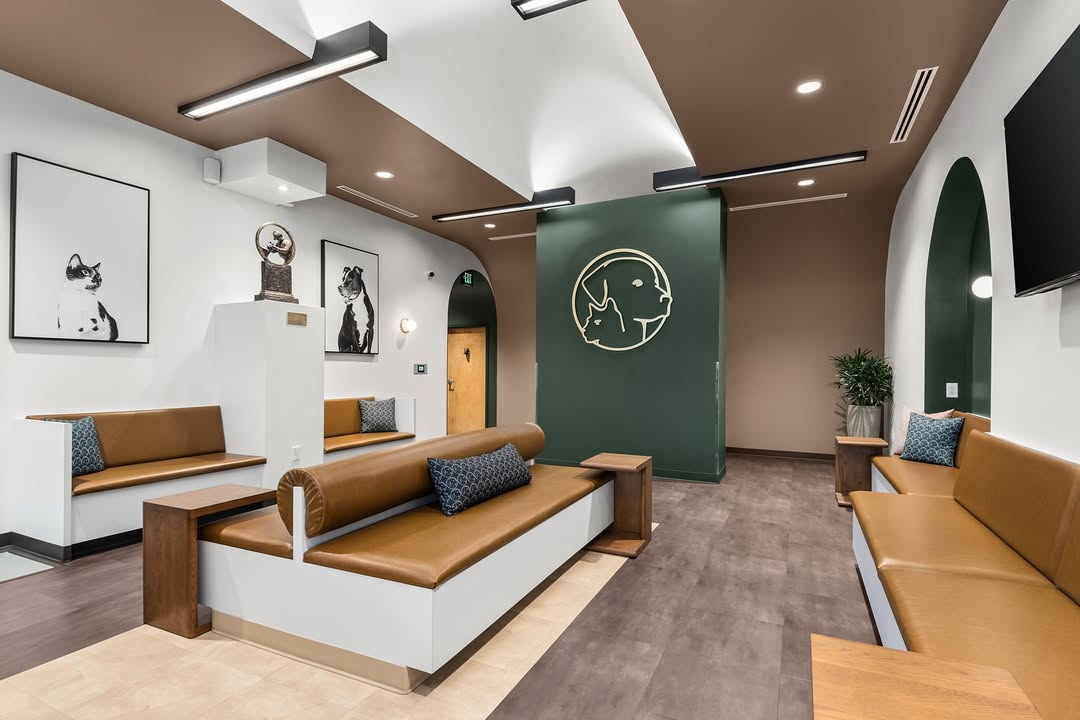
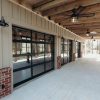
The goal of a phasing plan in one image: a waiting area this calm, kept this calm, while exam rooms are built behind a sealed barrier down the hall.
Should You Renovate, Add On, or Build New?
Renovating existing interior space is the fastest and least expensive way to add exam rooms, typically 3 to 6 months total. A building addition takes 8 to 12 months but adds true capacity. Ground-up construction of a new veterinary hospital takes 12 to 24 months and only makes sense when the existing site can’t support the practice’s future.
| Approach | Total Timeline | Best When | Watch Out For |
| Interior renovation | 3–6 months | You have underused space: storage, oversized offices, and a second breakroom | Every square foot gained comes from somewhere; protect treatment and support areas |
| Building addition | 8–12 months | The floor plan is genuinely full, and the site has room to grow | Zoning setbacks, parking requirements, and longer permitting |
| New construction | 12–24 months | The practice has outgrown the site itself, not just the building | Land acquisition and site work add time before the building even starts |
A surprising number of clinics we walk through have one to two exam rooms hiding in plain sight: a storage room doing the job a $200 shed could do, a private office nobody has sat in since 2023, a break area twice the size the team needs. The cheapest exam room is the one you don’t have to build a foundation under.
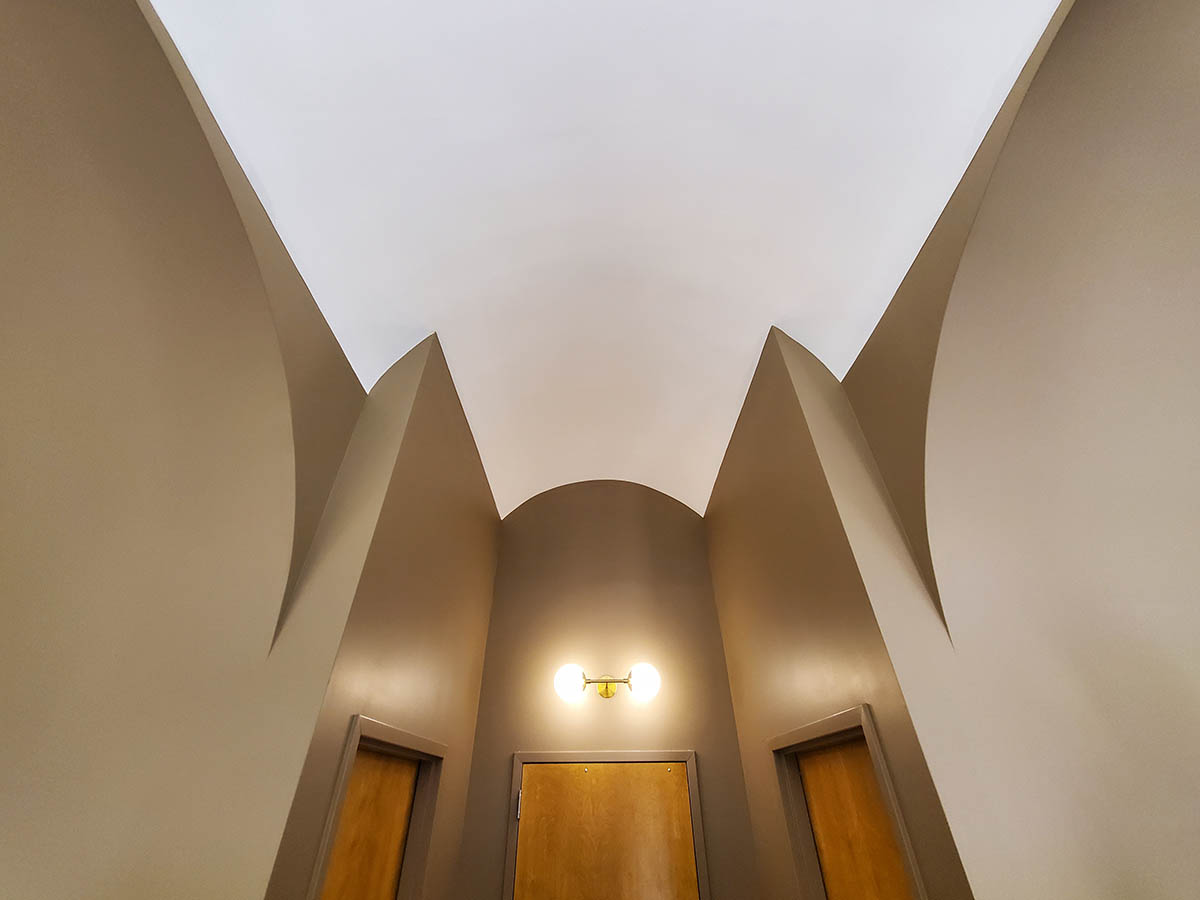
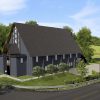
When the floor plan is truly full, an addition is the answer: this animal hospital expansion extended the original building to add clinical space.
What Makes Veterinary Exam Room Construction Different From Regular Commercial Work?
Veterinary exam rooms need species-appropriate sound isolation, ventilation designed for odor and cross-contamination control, seamless, cleanable flooring, plumbing in nearly every room, and durable finishes that survive claws and cleaning chemicals. A contractor who treats them like generic office rooms will build rooms your team fights with for a decade.
HVAC That Understands Animals
Veterinary HVAC is its own discipline. Exam rooms benefit from individual exhaust or higher air-change rates so the smell of one anxious patient doesn’t greet the next one. Cat-side rooms in fear-free oriented practices are often pressurized and ducted separately from dog areas. None of this is exotic, but it has to be in the drawings from day one, because retrofitting ductwork after drywall is a miserable, expensive exercise.
Utility Relocation Is the Hidden Schedule Item
New exam rooms almost always want sinks, and sinks need supply and drain lines. If the new rooms sit far from existing plumbing chases, drain lines may need to be trenched into the slab, which means concrete cutting, which means noise, dust control, and a few extra days. A good feasibility study finds this in week one, not week nine.
Sound Attenuation Between Rooms
A barking dog in room two shouldn’t derail a euthanasia conversation in room three. Insulated walls running full height to the deck, solid-core doors, and attention to penetrations make the difference. It costs little during framing and is nearly impossible to fix afterward.
Exam Room Sizing That Actually Works
Most general-practice exam rooms range between 100 and 140 square feet. Going bigger, 140 to 180 square feet, pays off for large-breed rooms, multi-pet families, and comfort rooms. Below about 90 square feet, the room fights you: there’s nowhere for a second family member to sit, and a nervous 80-pound dog has no neutral corner. When we lay out a veterinary clinic buildout, we’d rather give you two well-sized rooms than three cramped ones, and we’ll show you the patient-flow math behind that recommendation.
Finishes That Survive the Job
Sheet vinyl or resinous flooring with integral coved bases, scrubbable wall protection at animal height, and casework that tolerates daily disinfection. These are small line items with long consequences, and they’re the kind of detail a healthcare-experienced design-build team specifies by default.
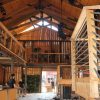
Exam rooms feed a treatment core like this one. Good veterinary workflow design plans both together, so new rooms add capacity instead of congestion.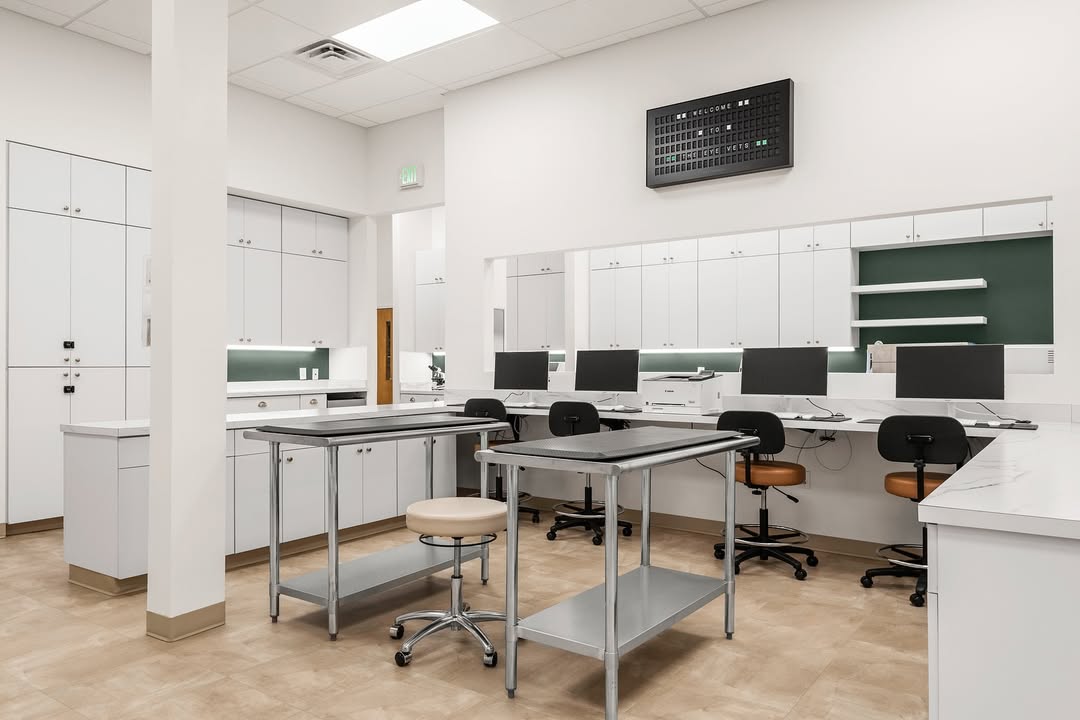
What Does a Week-by-Week Schedule Look Like?
For a typical two-exam-room interior addition, construction runs about eight weeks: one week of containment and demolition, two weeks of framing and rough-in, one week for inspections and drywall, two weeks of finishes, one week of casework and fixtures, and a final week for equipment and inspection.
Here’s a representative schedule for converting existing interior space into two new exam rooms in an operating clinic. Yours will differ in the details, but the rhythm holds:
| Week | Work Underway | What the Clinic Notices |
| Week 1 | Dust containment built, negative air established, demolition | Demo noise scheduled off-peak; temporary patient route begins |
| Week 2 | Framing, door frames set, in-slab plumbing if required | Any concrete cutting done after hours |
| Week 3 | Electrical, plumbing, and HVAC rough-in | One planned after-hours utility tie-in |
| Week 4 | Rough-in inspections, insulation, sound batts, drywall | Quietest stretch of the project |
| Week 5 | Drywall finish, prime, and paint | Low-odor products; ventilation managed |
| Week 6 | Flooring, coved base, ceiling grid, and lights | Rooms start looking like rooms |
| Week 7 | Casework, sinks, doors, hardware, wall protection | Punch-list walk with the practice owner |
| Week 8 | Exam equipment install, final inspection, deep clean | Barriers come down; rooms open to appointments |
What Delays Veterinary Construction Timelines, and How Do You Prevent It?
The most common timeline risks are permit revision cycles, hidden conditions inside existing walls, long-lead material deliveries, and change orders from late design decisions. Each is largely preventable with complete drawings, early investigation, early ordering, and locked decisions before construction starts.
| Risk | Typical Delay | How It’s Prevented |
| Permit comments and revisions | 2–4 weeks per cycle | Complete, code-coordinated construction documents submitted for the first time |
| Hidden conditions (undocumented plumbing, undersized panel) | 1–3 weeks | Pre-construction investigation: panel review, exploratory openings, as-built verification |
| Long-lead materials (doors, casework, HVAC equipment) | 2–8 weeks | Order during permitting, not after; choose readily available alternates when stock items work |
| Late design changes | 1–4 weeks plus cost | Finish selections locked before demolition; mockups reviewed early |
| Inspection scheduling gaps | 2–5 days each | A contractor who books inspections in advance and knows the local department’s rhythm |
Notice the pattern: nearly every delay traces back to decisions and information, not labor. Crews build at roughly the same pace everywhere. Projects fall behind in the gaps between design, permitting, and construction, which is exactly why having one accountable team across all three stages compresses the timeline.
What Do Additional Exam Rooms Actually Do for Your Practice?
Exam rooms are the throughput bottleneck in most veterinary practices. Each additional room lets a doctor and technician team run parallel appointments, so a veterinarian supported by three rooms can stay continuously productive while rooms turn over, instead of waiting between patients.
We’re builders, not practice consultants, so we won’t hand you invented revenue projections. But the operational logic is straightforward, and we’ve watched it play out for clients. When a doctor has only two rooms, every room turnover, the cleaning, the check-in, and the weigh-in becomes the doctor’s idle time. With a third room in rotation, the team stages the next patient while the doctor finishes the current one. Wait times drop, the lobby calms down, same-day sick visits stop getting turned away, and your front desk stops apologizing.
The honest way to evaluate the investment: count the appointments you currently turn away or push out a week, talk to your practice management software about average revenue per visit, and weigh that against a project whose construction phase lasts roughly eight weeks. For most growing practices, the math resolves quickly. The bigger cost is usually the year spent deciding.
Why Tennessee Veterinary Practices Work With Design Build Partners
Design Build Partners is a Nashville architecture and construction firm with more than three decades of design-build experience across Tennessee and Kentucky. Our veterinary work includes Carothers Parkway Veterinary Clinic and Richland Animal Clinic, alongside medical projects like Academy Children’s Clinic, the Centennial Medical Center endoscopy office, and The Eye Vets Veterinary Ophthalmologist, work that shaped how we handle infection control, clinical finishes, and occupied-facility phasing.
Because we’re both the architect and the builder, there’s no gap between the drawings and the job site, no finger-pointing between designer and contractor, and no surprise when the permit set meets reality. Our work has been recognized by the American Institute of Architects, the Associated General Contractors, the Tennessean, the DVM360 Hospital Design360™ Awards, and the Nashville Scene. You can see how we run projects on our process page, or explore our veterinary construction services in more depth.
Frequently Asked Questions
How long does it take to add one exam room to a veterinary clinic?
A single exam room built within existing interior space typically takes 4 to 6 weeks of construction. With design and permitting included, plan on about 3 to 4 months from kickoff to seeing patients in the room.
Do I need a permit to convert a storage room into an exam room?
Almost always, yes. Changing a room’s use, adding plumbing, moving walls, or modifying electrical and HVAC systems all trigger commercial permit requirements. Skipping the permit risks failed insurance claims, problems at resale, and stop-work orders that cost far more time than the permit ever would.
Will construction stress the animals in my clinic?
It can, which is why noise scheduling matters as much as dust control. Demolition and concrete cutting belong outside appointment hours. With proper phasing, sealed containment, and a quiet-hours agreement in the construction contract, most clinics report that patients and clients barely register the project.
When is the best time of year to schedule a veterinary clinic renovation?
The best construction window is your slowest season, which for many companion-animal practices means late fall or winter, after the summer rush and before spring wellness season. Work backward: a winter construction start means beginning design the previous summer.
How early should I start planning an exam room addition?
Six to nine months before you want the rooms open. That covers feasibility, design, permitting, and material lead times without paying rush premiums. Practices that call us when they’re already turning patients away wish, almost universally, that they’d called a year sooner.
Does Design Build Partners work outside Nashville?
Yes. We serve veterinary and healthcare clients throughout Tennessee and into Kentucky. Call 615-275-5133, and we’ll tell you quickly whether your project and location make sense for us.
| Get a Realistic Timeline for Your Clinic
One conversation with Rob Cochran will tell you more about your project’s real schedule than another month of research. No pressure, no obligation, and a straight answer about whether your space can deliver the rooms you need. Start the Conversation |
Design Build Partners is an integrated architecture and design-build construction firm based in Nashville, Tennessee, serving healthcare, veterinary, and commercial clients across Tennessee and Kentucky for more than three decades. Learn more about our veterinary facilities work, our medical facilities services, or the team behind the work.
Updated on June 14, 2026


Recent Comments